

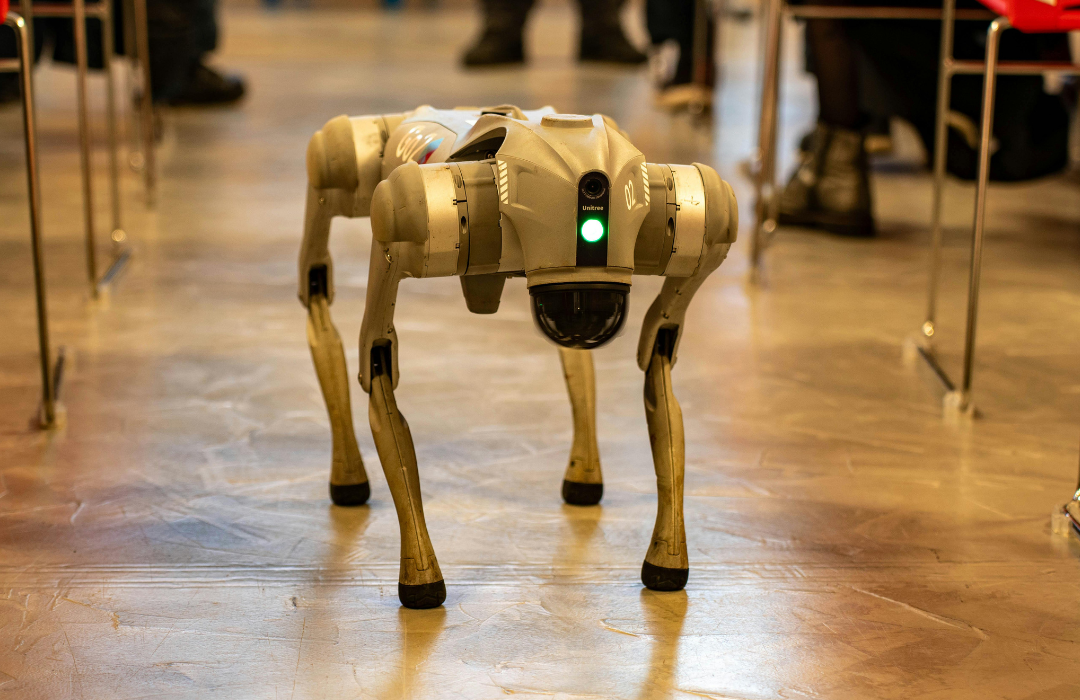
The Era of Robots: The Latest Advancements in Robotics Around the World
The future has arrived, and it’s made of circuits, sensors, and intelligence. The era of robots once confined to science fiction is now fully underway, with rapid developments unfolding across industries and continents. Robotics has transitioned from being a niche, highly technical field to a transformative force reshaping how we work, move, and live.
The Acceleration of Robotics
Several factors have converged to push robotics into a new age of capability and scale. At the core is the fusion of cutting-edge artificial intelligence and physical machines. Unlike past generations of robots programmed only for repetitive tasks, today’s machines can learn, adapt, and even reason using sophisticated AI models.
Alongside this, industries are under increased pressure due to labour shortages, rising costs, and a demand for low-error, 24-hour operations. Robots help fill these gaps. Hardware has become cheaper and more versatile, making high-quality robotics more accessible to companies and research institutions worldwide.
Countries such as China, Japan, South Korea, and the United States are leading in robotics adoption and innovation, with Europe and the Middle East also making strides. The global race is on not just to create robots, but to harness their full potential in real-world environments.
Key Robotics Advancements in 2025
1. Humanoid and General-Purpose Robots
Humanoid robots, machines with a body structure that mirrors humans have reached a significant milestone. They are now capable of walking, lifting, navigating obstacles, and performing multiple tasks in industrial or service environments. Companies like Tesla, Figure, Sanctuary AI, and Agility Robotics are pioneering robots designed to be as adaptable as humans, excelling in environments where traditional robots would struggle.
What’s revolutionary is the shift from robots designed for a single task to “general-purpose” robots that can learn and apply skills across different jobs, potentially making them the next wave of automation in retail, manufacturing, and even caregiving.
2. Robots Powered by Multimodal AI
One of the most exciting developments in 2025 is the merging of AI systems, particularly large language and vision models,with robotics. These “VLA” systems (Vision-Language-Action) allow robots to interpret human instructions, understand their surroundings with cameras and sensors, and then perform actions accordingly.
For example, a robot can now be told, “Pick up the red box and place it on the top shelf,” and complete the task by recognizing colours, planning a route, and coordinating movement. This kind of intelligent behavior marks a serious leap from simple programmed motions.
3. Collaborative Robots (Cobots)
Robots designed to work alongside humans ,known as collaborative robots or “cobots” ,are becoming significantly more advanced and widely used. Unlike traditional industrial robots, which require safety cages, cobots feature enhanced sensing technologies to detect nearby humans and respond safely.
These robots are now present in industries ranging from automotive manufacturing to food processing, logistics, and healthcare. They are built to assist rather than replace, handling tasks like packaging, sorting, lifting, and dispensing, while people handle quality control and decision-making.
4. Service Robots Enter Public Life
Beyond manual labour and factories, robots are increasingly entering public and personal environments. Service robots can now act as restaurant waiters, hotel assistants, security monitors, or companions for the elderly. In healthcare, surgical robots are performing precise operations with real-time AI guidance.
There’s also growth in “social robots”, machines that interact with humans through expressions, speech, and gestures, often used for education, therapy, and customer support. These developments reflect not only progress in robotic engineering but also in human-robot interaction, making robots feel more intuitive and acceptable to everyday users.
5. Market Growth and Global Investment
It’s not just the tech that’s growing, it’s the market too. Countries around the world are in a race to build robotics ecosystems capable of boosting economic output. China, for example, has rapidly scaled its investment to dominate in industrial robots and plans to capture a multi-trillion-dollar robotics market in the coming decade. Meanwhile, the U.S. continues to lead in robotic AI technologies and platforms, while South Korea and Japan invest heavily in next-generation manufacturing and personal robotics.
Challenges Ahead
Despite the phenomenal growth, robotics still faces challenges. Robots still struggle with unstructured environments, the outdoors, dynamic homes, or any setting that’s constantly changing. Costs can still be prohibitive for smaller businesses, and integrating robotics with existing human workflows takes time and training.
There are also rising ethical and safety concerns. As robots become more autonomous, questions around control, responsibility, regulation, and job replacement arise. Ensuring that robots are used in ways that preserve human dignity and opportunity is an ongoing global conversation.
The Road Ahead
As robotic intelligence improves and adoption grows, the role of robots in everyday life will expand exponentially. We will soon see robots not just on factory lines, but woven into homes, cities, and organisations.
What is certain is that robots will not simply replace humans, they will reshape what humans are capable of doing. Whether it’s lifting economic potential, supporting ageing populations, or automating dangerous jobs, the robotics revolution is here, and it is only just beginning.
The era of robots is now. And we are all living in it.