

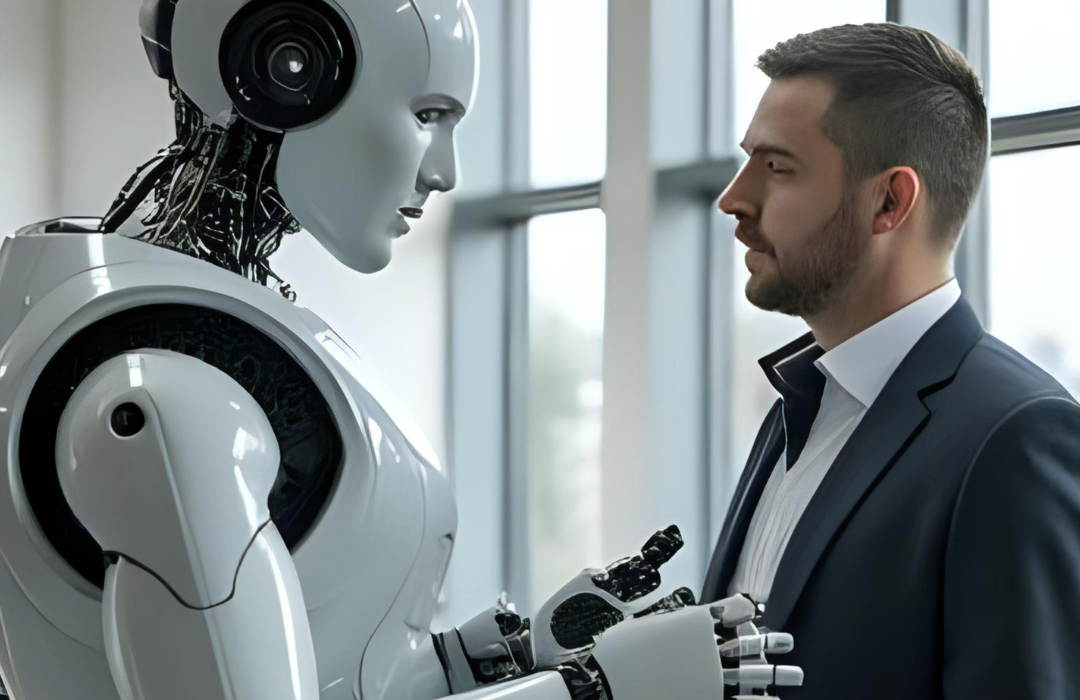
How Far Away Are Robots From Replacing Humans in the Workplace?
The notion that robots will soon replace humans in the workplace has been a recurring theme in technology discourse for decades. With advances in robotics and artificial intelligence accelerating, the question is no longer if robots will impact work it’s how much, in which ways, and how quickly. The short answer? Robots are already changing many jobs, but full-scale human replacement remains a more gradual and complex prospect than often portrayed.
Robots are already here but mostly as collaborators
Robots and automation are far from theoretical. They are present in factories, warehouses, surgery theatres, and logistics hubs. The fact is, in many places robots already perform tasks humans used to do especially repetitive, physical, dangerous or highly structured tasks. For example, robots that help inspection on offshore rigs or move heavy loads in warehouses reduce risk and physical strain on workers.
Yet, very often the role is not replacement of humans in total but rather augmentation. According to a recent review, robotics tend to supplement human labour rather than entirely substitute it.This is a key distinction: many jobs evolve rather than vanish, with humans shifting into new roles or higher-value tasks.
Where the greatest exposure is
Not all jobs face equal risk. Research shows that exposure to AI and robotics is higher in certain tasks and sectors. For example:
- A 2023 study found that in the U.S., 19 % of workers are in jobs where the most important activities are highly exposed
- Another paper notes that robotics implementation affects “task, knowledge, social and contextual work characteristics” in various ways.
Tasks that are routine, repetitive, rules-based (whether cognitive or physical) are more susceptible. Human jobs that rely on creativity, complex judgment, emotional intelligence, unpredictable environments or social interaction are less likely to be fully replaced in the near term.
Evidence of impact — but modest when aggregated
There is empirical data on the impact of robots. One U.S. study found that for every additional robot per 1,000 workers, wages declined by 0.42% and employment-to-population ratio dropped by 0.2 percentage points in affected areas.These numbers, while meaningful locally, show that the aggregate displacement is still moderate at national level (so far).
Other research also highlights that while robotics can improve efficiency and safety, they may also reduce the meaningfulness of work for some workers e.g., less autonomy, fewer opportunities for skill use.
So what’s the timeline looking like?
Based on current data and research, the following rough horizons make sense:
- Near-term (next 5–10 years): Significant gains in automation in sectors such as manufacturing, logistics, warehousing, repetitive services. Robots will increasingly work alongside humans (e.g., collaborative robots or “cobots”). The human role shifts from manual task execution to oversight, exception-handling, system management.
- Medium-term (10–20 years): More sophisticated robotics + AI mean broader adoption across sectors. Some jobs could be heavily transformed or reduced (especially in structured environments). Yet full replacement is still limited. Human roles might become more about design, maintenance, supervision, relational tasks.
- Long-term (20+ years): Under more aggressive scenarios, many job tasks could be automated. It’s possible that large chunks of work will no longer require humans as primary executors. But even then, there will likely remain roles where human qualities (judgment, empathy, adaptability) are hard to duplicate.
Why full replacement remains distant in many cases
There are several reasons why robots aren’t simply substituting humans wholesale:
- Complexity of real-world environments: Many work settings are unstructured, needing adaptation, improvisation, human judgement. Robots still struggle in such contexts.
- Integration costs & organisational change: Deploying robots isn’t plug-and-play. Training, system redesign, human-machine collaboration, change management are all required.
- Human skills matter: Creativity, empathy, social interaction, strategic thinking remain very human. Many jobs are a blend of these with routine tasks — the latter may be automated, the former remain.
- Ethics, policy and societal choices: Decisions about how far to automate involve policy, labour markets, social norms. Some tasks might be automated but society may choose to retain human-centric roles.
- Mixed effects on work quality: Research shows robotisation can reduce job quality for some for example through reduced autonomy or increased monitoring. Organisations may hesitate to scale automation if it harms morale or performance.
Implications for workers, organisations and societies
- For workers: Being adaptable is key. Focus on developing skills that complement robots rather than compete with them: problem-solving, communication, social intelligence, overseeing automation, managing exceptions.
- For organisations: Think of automation not just as cost-cutting, but as redesigning work. Identify where robotics and humans can best collaborate. Ensure change management, training, and human-machine interface are thoughtfully designed.
- For society and policy: There needs to be investment in reskilling and upskilling. Education systems need to prepare for a shifting future of work. Also, policy needs to manage transitions, ensure labour protections, address job quality, and govern how automation is deployed.
- For Africa and emerging markets: The timeline may be different: robotics adoption may lag in some sectors due to cost, infrastructure or labour market conditions — offering opportunities to leapfrog but also to design human-centred automation strategies that prioritise inclusive growth.
Are robots about to replace humans en masse? Not imminently but the shift is underway. What is clear is that robotics will reshape how we work, what we work on, and who does which parts of the job. The question for workers, businesses and governments isn’t only whether robots will replace humans, but how they can partner with automation, preserve human value, and design work for the future that benefits people and organisations.
The era of robotics means an evolving workplace, not necessarily an eliminated human workforce. The sooner we prepare, the more opportunity there is to shape a future in which humans and machines together create more value, rather than machines simply replacing humans.